
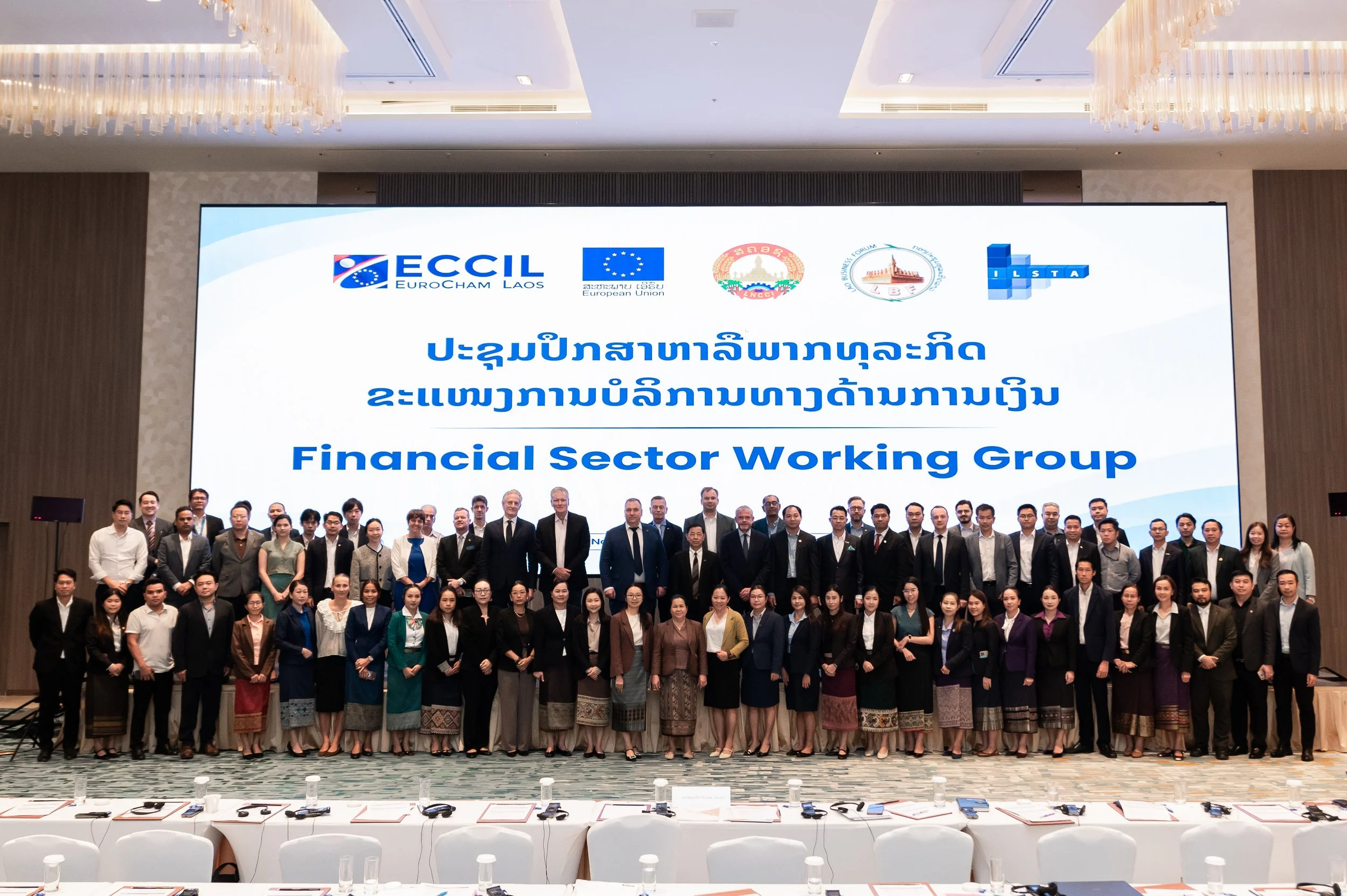
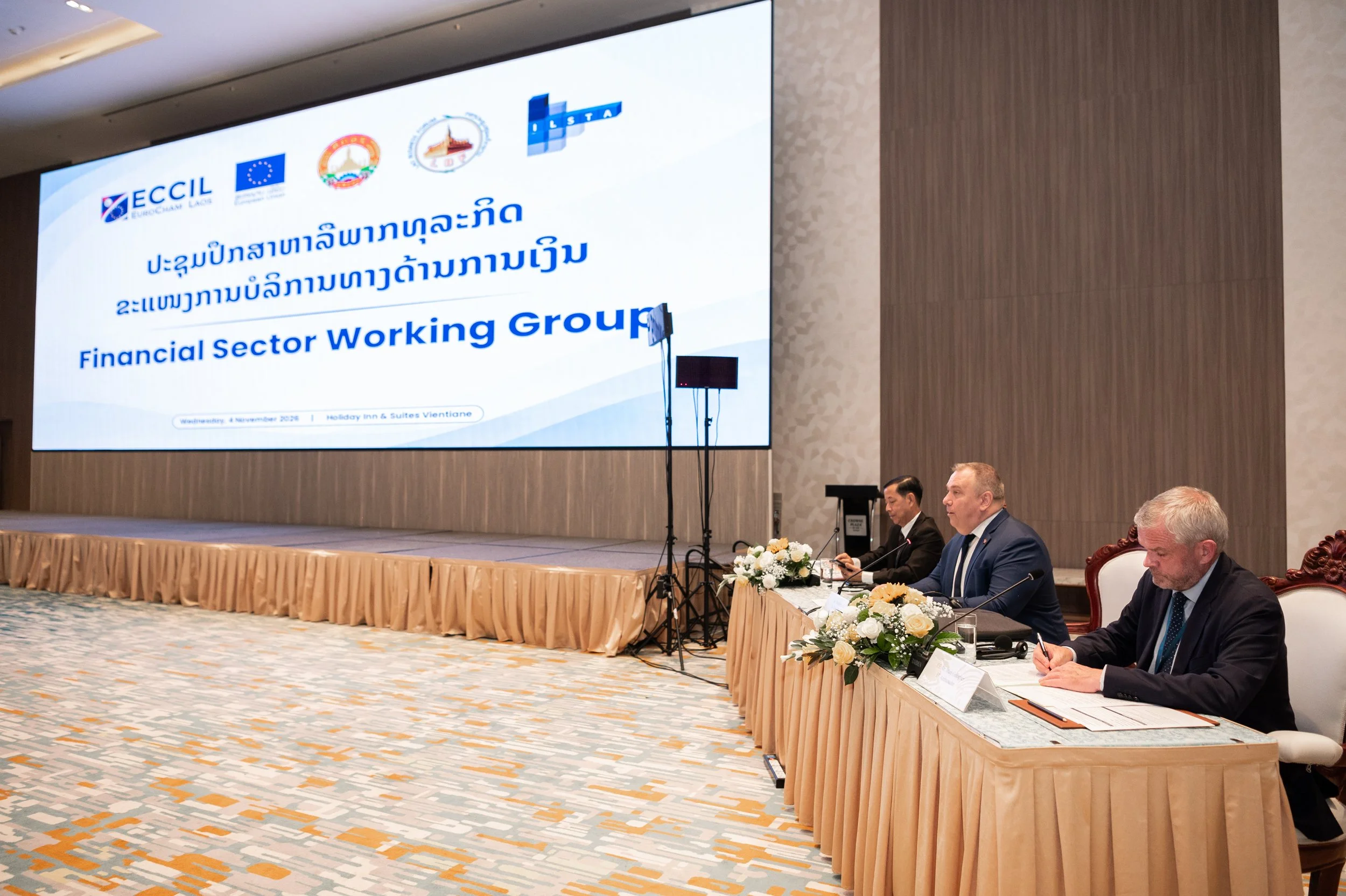
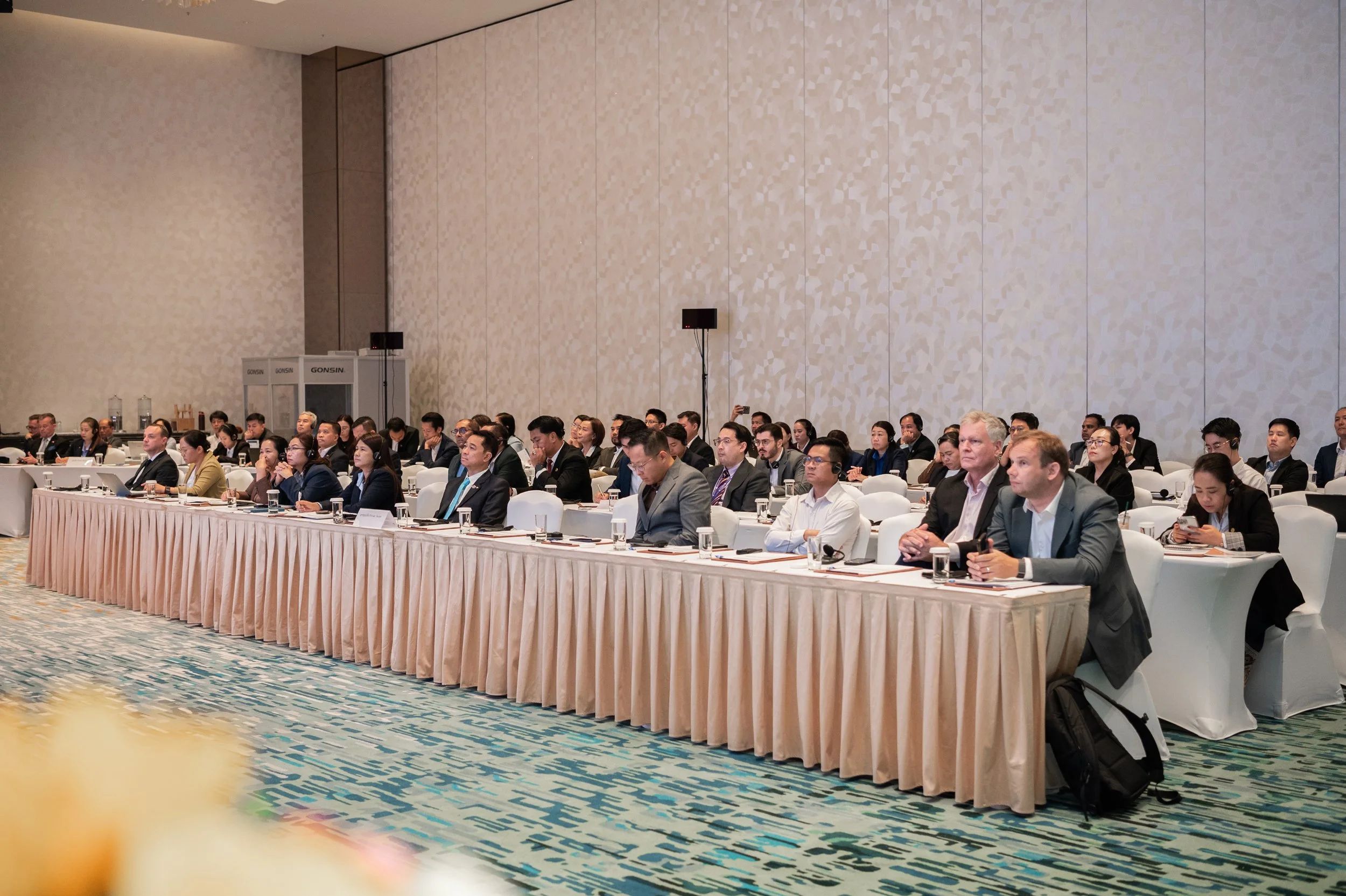
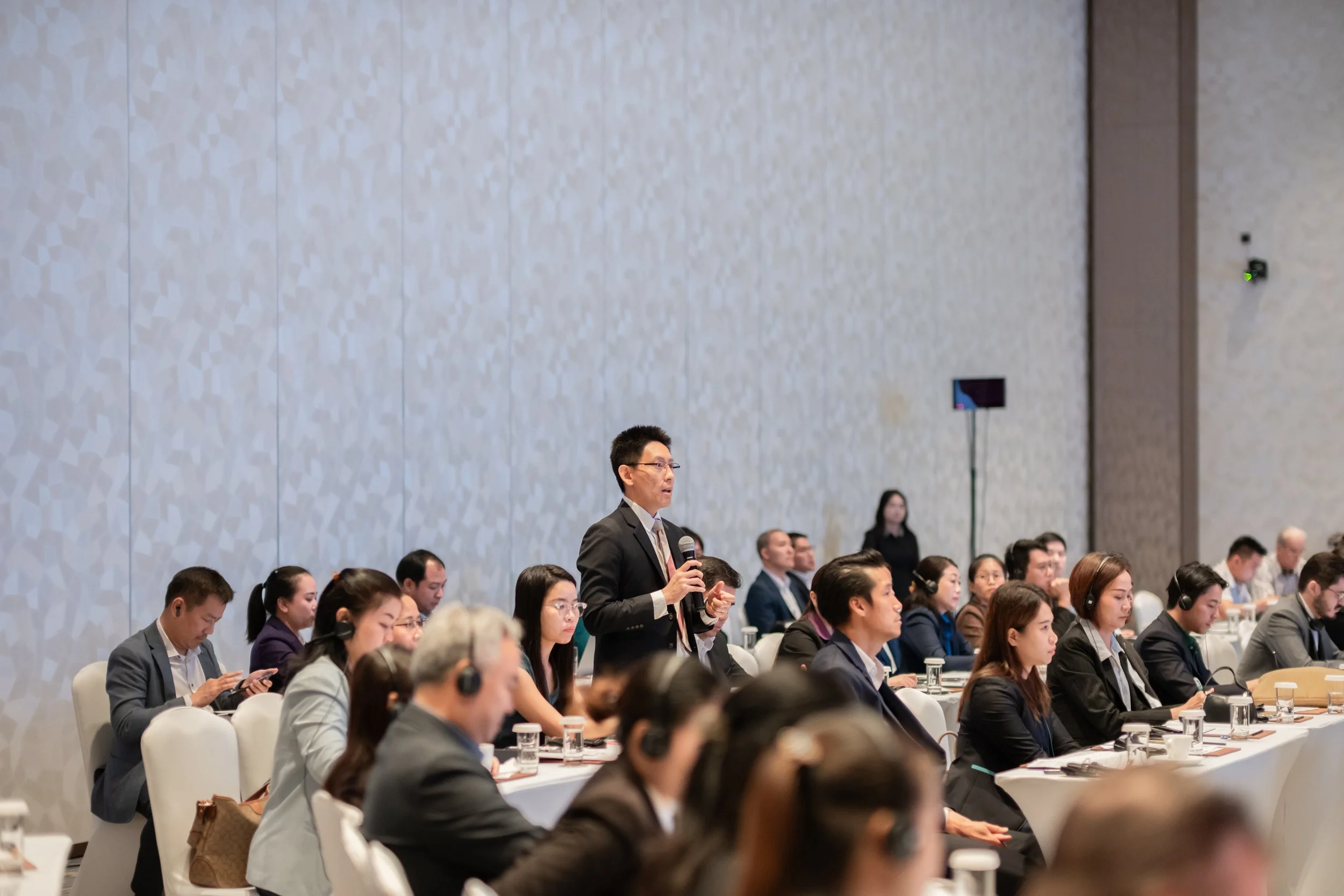
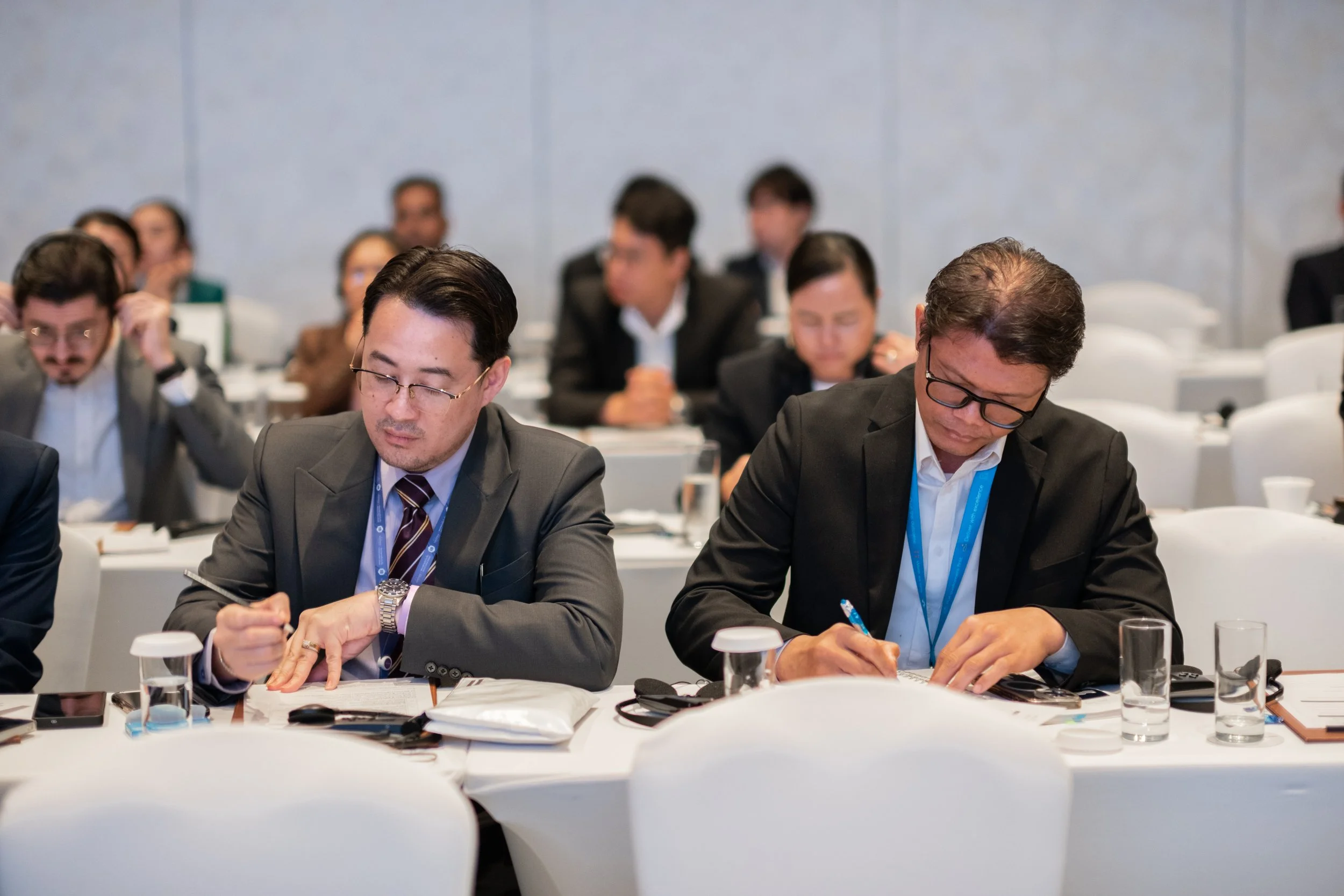
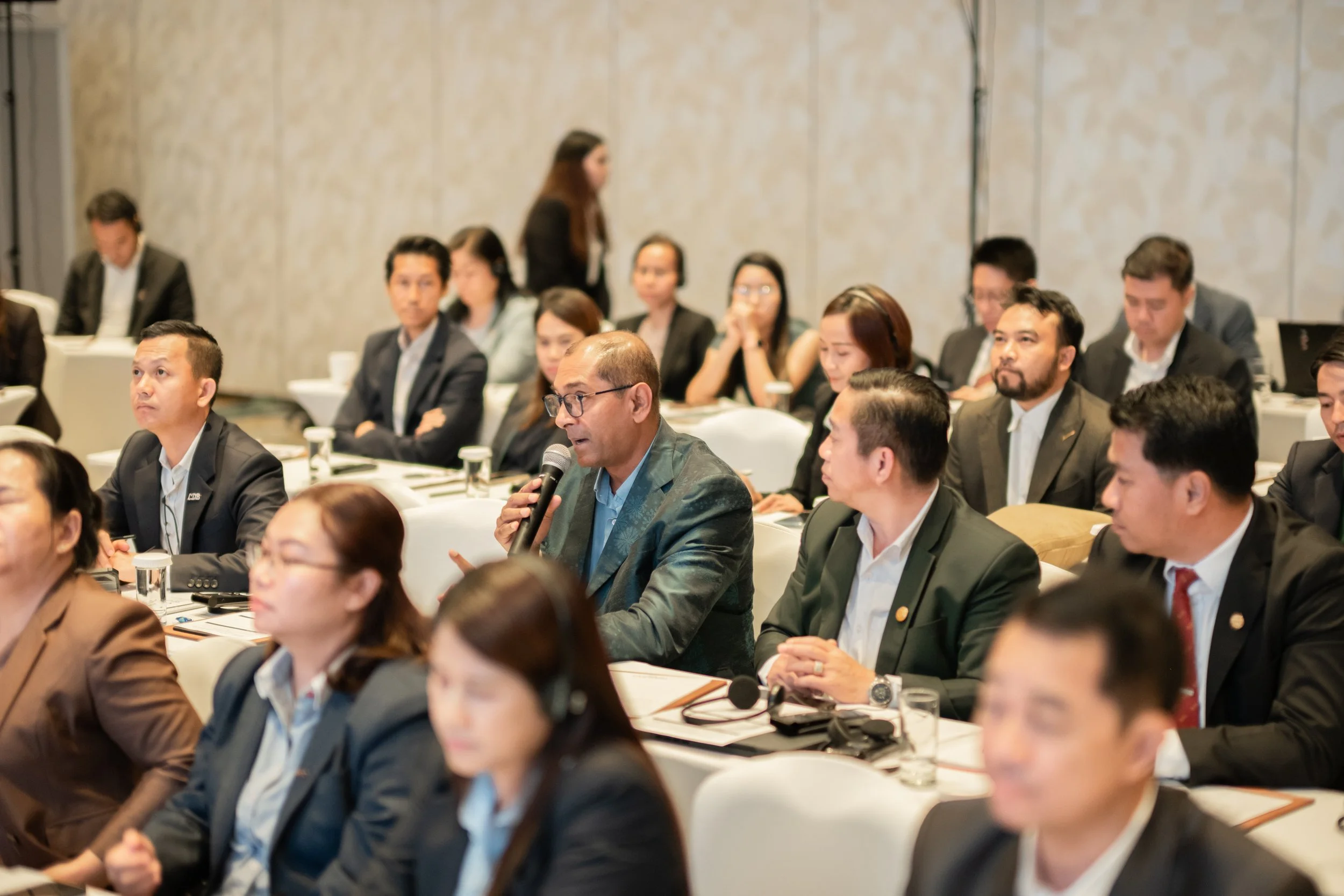
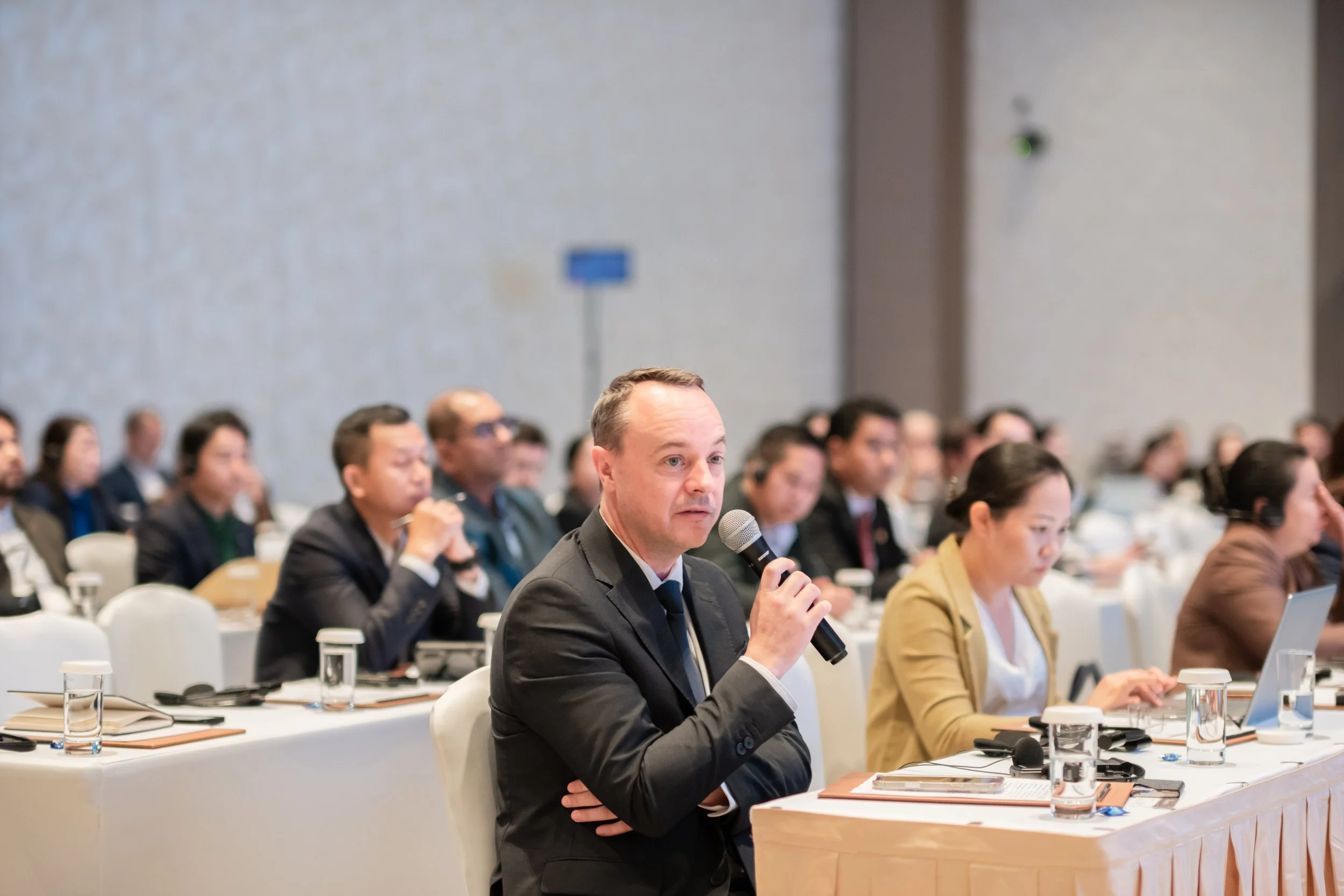
Vientiane, Lao PDR, 4 November 2026 - The European Chamber of Commerce and Industry in Laos (EuroCham Laos) and the Lao National Chamber of Commerce and Industry (LNCCI) co-organized the second Financial Sector Working Group (FSWG) Meeting under the Lao Business Forum framework at Holiday Inn & Suites Vientiane. The meeting brought together representatives from government institutions, commercial banks, financial institutions, business associations, the private sector and international development partners to discuss pressing challenges facing Lao PDR's financial sector and identify practical solutions to strengthen the country's financial environment.
The meeting opened with remarks from Mr. Tim Scheffmann, Co-Chair of the FSWG and President of EuroCham Laos; Mr. Vanthong Sitthikoun, Vice President of LNCCI; and H.E. Mr. Mark Gallagher, Ambassador of the European Union to Lao PDR.
In his remarks, Ambassador Gallagher recalled the five priorities established during the first FSWG meeting in September 2025: compliance with Financial Action Task Force (FATF) standards, foreign currency management, the length of legal proceedings, digital transformation and financial inclusion for rural communities. He also acknowledged recent developments, including progress in stabilizing the Lao kip, the first listing of a Lao sovereign bond in Hong Kong and the upgrade of Lao PDR's sovereign credit rating by S&P from CCC+ to B-. However, he stressed that continued efforts are needed to strengthen the country's financial reputation and maintain investor confidence.
The Ambassador highlighted the implications of Lao PDR's inclusion on the FATF grey list, explaining that enhanced due diligence requirements applied by international banks can make cross-border transactions more complicated and costly, affecting businesses, trade and investment. He reaffirmed the European Union's commitment to supporting Lao PDR in strengthening its Anti-Money Laundering and Countering the Financing of Terrorism (AML/CFT) framework, particularly through implementation of the FATF Action Plan.
A key session focused on the current status of Lao PDR's FATF grey listing and the progress of its National Action Plan. Mr. Tom Hanson, AML/CFT Expert from the International Law and Development Support (ILSTA), presented an update on the country's progress and outstanding requirements under the FATF's International Co-operation Review Group (ICRG) Action Plan. According to the latest progress report, two of the 11 action plan items had been largely addressed, three partially addressed and six remained unaddressed. With the January 2027 deadline approaching, he highlighted the urgency of accelerating implementation and maintaining strong institutional commitment.
Mr. Hanson also outlined the wider economic implications of grey-listing, drawing on an IMF study which found that grey-listed countries experienced an average reduction in capital inflows equivalent to 7.6% of GDP. Other potential consequences include increased scrutiny of international transactions, higher compliance costs, delays in cross-border payments and reduced willingness among some foreign banks and investors to maintain business relationships.
The importance of addressing FATF requirements was further emphasized by the Working Group's co-chairs. Mr. Scheffmann noted that while some businesses may not yet feel the full effects of grey-listing, certain companies have already encountered difficulties transferring funds through European banks. Mr. Vanthong also stressed that meeting FATF requirements and securing Lao PDR's removal from the grey list should remain key priorities for the financial sector. Several participants echoed this view, highlighting the need for cooperation between public institutions, financial regulators and the private sector.
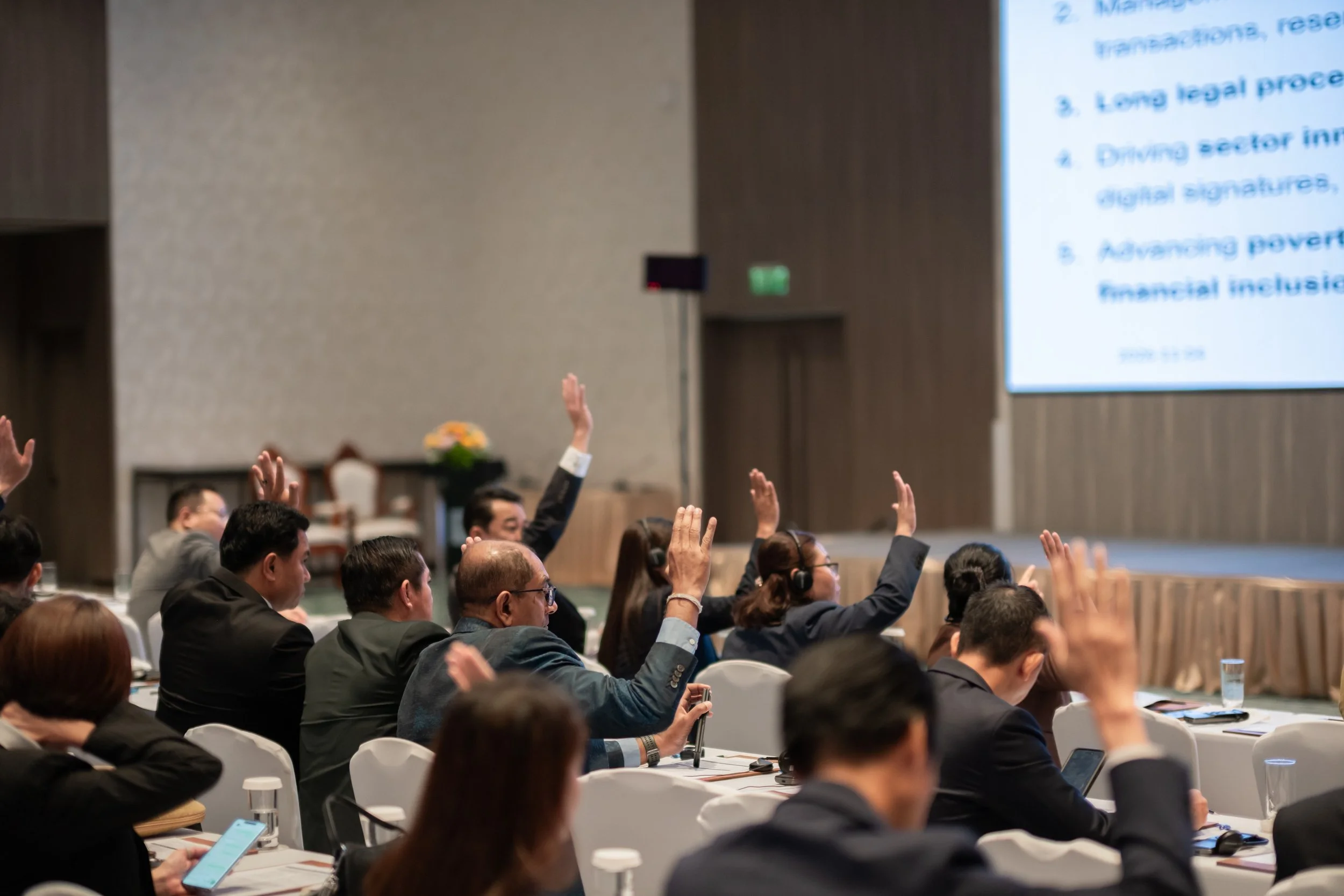
Beyond FATF compliance, participants discussed practical challenges affecting financial sector operations, including difficulties with international transactions, digital collateral registration and the need for clearer regulatory guidance for reporting institutions. Discussions also covered foreign currency management, financial innovation and digitalization, and expanding access to financial services for rural communities. Building on the five priorities identified during the first meeting, participants explored consolidating the issues into three broader areas: FATF compliance and related regulatory challenges, financial sector innovation and digitalization, and financial inclusion and poverty reduction for rural communities.
At the conclusion of the meeting, the Working Group agreed to assign responsibilities for priority issues and prepare evidence-based position papers by mid-December 2026. These papers will form the basis for technical consultations with the Bank of the Lao PDR ahead of the annual Lao Business Forum, chaired by the Prime Minister, in early 2027. Follow-up discussions will further develop practical solutions and recommendations for the financial sector.
The meeting reaffirmed the importance of continued public-private dialogue in addressing financial sector challenges and improving the business environment in Lao PDR. Through the Financial Sector Working Group, EuroCham Laos and LNCCI will continue facilitating engagement between relevant stakeholders and supporting practical recommendations towards a more transparent, reliable and inclusive financial system.
The meeting was organized with the support of the European Union in Lao PDR and Luxembourg Aid & Development, with technical contributions from ILSTA.